


Status: October 2, 2026. This VR headset comparison replaces the equipment overview from the autumn of 2024. Headsets introduced then are no longer presented as new products here: What matters today are their actual status, intended use, and whether they are intended for consumer or business use.
VR headset comparison 2026: What is available and what is announced?
Different device categories continue to coexist in the market. A consumer headset with a large game library is not automatically a good choice for an organized device fleet. Conversely, an enterprise model offers administrative features that may be unnecessary for a single private VR experience. The table therefore distinguishes between current offerings, older but still listed models, and future announcements.
| Model | Classification (as of October 2026) | Appropriate use |
|---|---|---|
| PICO 4 Ultra Enterprise | Current business model; PICO lists 12-GB and 16-GB variants. The German manufacturer's price was €819 and €1,060, respectively, at the time of the check. | Enterprise and multi-device operation, MR applications, managed installations. |
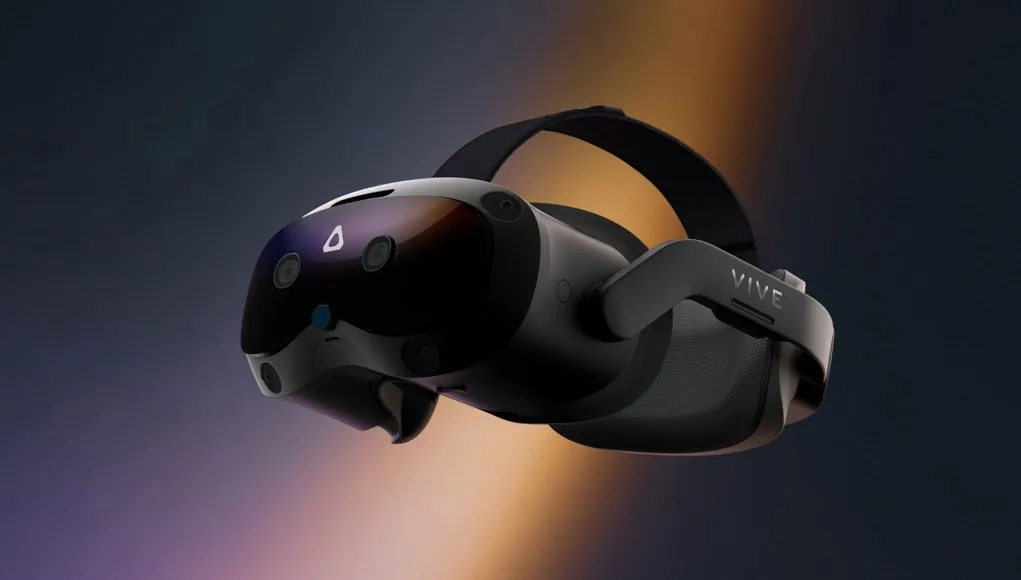
| HTC VIVE Focus Vision | Introduced in 2024 and still listed on the German VIVE sites. Standalone and PC VR, with optional DisplayPort streaming kit. | PC VR, standalone applications, and professional scenarios when the specific accessories and software workflow are suitable. |
| Samsung Galaxy XR | Released in 2025; sales began in the USA and South Korea; UK will follow in July 2026. Local availability and price are market-dependent. | Android XR apps, spatial productivity, and new AI features; check availability before planning. |
| Valve Steam Frame | Listed in the official Steam hardware section since September 2026. When checked, the Steam Store showed a US price of around $1,059; please check the German availability and final price directly in the store. | Steam library and PC/standalone workflows; test compatibility with the required titles before purchasing them. |
| Meta Quest 3 / Quest 3S | Consumer generation of 2023/2024. No new headset announcement in October 2026; availability depends on the respective sales channel. | Consumer VR and existing content; for business fleets, management and support must be evaluated separately. |
| Meta VR Glasses | Announced in September 2026; sales are planned for spring 2027 according to Meta. No available purchase device yet. | Observe, but do not plan to purchase it as an immediate alternative today. |
The word „currently“ here refers to the current market situation, not the year of release of each product. Thus, the HTC VIVE Focus Vision is a 2024 device that HTC continues to sell. The PICO 4 Ultra Enterprise is listed as a business product. Meta, in turn, has already announced a 2027 release date for its lightweight VR glasses, which are not yet available for purchase. For background information and clarification, see our article on XR glasses in eyeglass format.
PICO 4 Ultra Enterprise: the business entry point for managed devices
For companies that want to deploy and manage multiple headsets centrally, the PICO 4 Ultra Enterprise is an obvious starting point for testing. PICO currently offers it as an Enterprise model with Enterprise OS, Business Store, PICO Business Suite, and Device Manager. The German product page lists 2160 × 2160 pixels per eye, a 105-degree field of view, Snapdragon XR2 Gen 2, and two 32-megapixel color passthrough cameras. These specifications describe the technical specifications, but do not replace testing with your own application.
At the time of this update, the manufacturer lists a recommended price of 819 euros for the 12 GB version and 1,060 euros for the 16 GB version. Prices, regional availability, and distribution may change. Companies should also clarify what administrative functions are included in their own setup, whether an additional MDM solution is needed, and which apps are available in the Business Store. Cleaning, replaceable face pads, charging cycles, and quick user changes are also important features for trade shows and training sessions.
For design4real, PICO is therefore often a suitable first option for VR and MR projects in companies. The decision should still depend on the application, duration, required data processing, and device management. The manufacturer's side on the matter PICO 4 Ultra Enterprise provides the technical data and the current price list.
HTC VIVE Focus Vision: 2024 model with PC VR focus
The VIVE Focus Vision was released in 2024 and was intended to be classified as an established model in a comparison in 2026, not as new hardware. HTC continues to list it on its German product pages. It offers standalone XR as well as PC VR; for a wired DisplayPort connection, HTC says the appropriate streaming kit and compatible PC hardware are required. The technical specifications list two LCD displays with 2448 × 2448 pixels per eye, a viewing angle of up to 120 degrees, and a DisplayPort refresh rate of 120 Hz in beta mode.
This can be interesting if an application requires high PC graphics performance or an existing VIVE workflow needs to be reused. However, the additional hardware, PC requirements, and software compatibility are all part of the overall calculation. HTC continues to have a German product overview and one German specifications page. Both help to check the actual features of the bundle offered.

Samsung Galaxy XR and Steam Frame: properly classifying new devices
The Samsung Galaxy XR shows that Android XR is now beyond the announcement phase. Samsung unveiled the headset as the first product of the platform developed jointly with Google and Qualcomm in 2025. The market launch began in the USA and South Korea; since July 2026, the device is also available in the UK. Among other things, Samsung mentions 4K Micro-OLED, Snapdragon XR2+ Gen 2, head, hand, and eye tracking, as well as Gemini integration. Whether the device is available for purchase in the country, what software is available there, and how Android Enterprise can be integrated must be checked on a case-by-case basis.
Valve listed Steam Frame in its Steam hardware section in September 2026. Steam lists its own library designation for titles that run independently on the device, and also highlights streaming via a 6GHz radio adapter. The official Steam Store showed about $1,059 when checked; retail price, German price, and delivery status may vary. The device is interesting for projects with existing SteamVR software, but its use should be tested with the specific applications and controllers. Steam Frame product page is the right place for the current status at any given time.
Meta Quest 3S and Meta VR Glasses: Consumer offering versus announcement
Meta Quest 3 and Quest 3S belong to the 2023 and 2024 consumer generation. They remain relevant when it comes to existing games, private use, or already developed Quest applications. Nevertheless, they should not be referred to as new headsets in a 2026 article. Other criteria for business use are also more important than for consumer VR: centralized management, reliable procurement, support duration, and a clear B2B roadmap. Meta has changed its commercial devices and services several times in recent years; our contribution to this article is based on the latest information. Horizon Managed Services and Meta's B2B course change that's what it orders.
The Meta VR Glasses presented in September 2026 are different from these. Meta describes a glasses format weighing around 100 grams with external computing and battery packs, micro-OLED displays and gesture control. The manufacturer states that spring 2027 is the planned launch date. The device could bring large virtual image areas into a significantly lighter format; however, statements regarding availability in Germany, price in euros, long-term comfort and real suitability for professional applications are not yet reliable before the market launch. Until then, the Meta VR Glasses are an announced development, not a recommendation to buy.
This distinction between headsets, XR glasses and smart glasses is also important for comparisons. A lightweight eyewear format can be interesting for media, displays and assistance, but it does not automatically replace a 6DoF headset for spatial training or a multi-user installation. More about the new models in the eyewear format can be found in our overview Meta VR Glasses.

Which VR headset fits which use case?
For a VR or MR project, the application case should first be determined. For enterprise applications with multiple devices, Enterprise OS, Device Manager, app distribution, and support are more important than a short-term low single price. For PC-based simulations, GPU performance, transmission, and tracking are crucial. For events, comfort during wear, quick cleaning, easy setup, and robust workflows are crucial. For consumer gaming, however, game library, price, and easy onboarding are key factors.
Our recommendation for a business-specific selection is therefore: PICO 4 Ultra Enterprise for managed fleets and typical standalone MR scenarios; HTC VIVE Focus Vision when PC VR or a suitable existing VIVE workflow is important; Galaxy XR and Steam Frame for specific Android XR or Steam applications. Meta Quest 3 and 3S remain consumer devices of an older generation. Meta VR Glasses belong on a watchlist for 2027, not in a procurement that should be implemented now.
The technical data in a comparison can facilitate a preliminary selection, but they do not answer how well a specific application runs on a headset. Therefore, before a rollout, a test device, the target application, administrative functions, data protection, and the expected lifespan of use should be evaluated together. Prices and regional availability were last reviewed on October 2, 2026.
Sources from manufacturers: PICO Germany; VIVE Germany; Samsung Germany; Steam Store: Steam Frame; Meta: VR Glasses.


