


Which VR platform will be the right one in 2026? The answer today depends less on the App Store alone than on the entire ecosystem: headset hardware, operating system, development tools, app distribution, device management, kiosk mode, support, and a long-term platform strategy. That is exactly why Meta Horizon OS, PICO, Apple visionOS, Android XR, SteamVR, and HTC VIVE must be evaluated differently.
For consumer gaming, Meta It remains the most obvious choice. For professionally managed B2B deployments, we see PICO currently often at the front. Apple Vision Pro is technically impressive but expensive and strategically more difficult to assess as a platform. Android XR has great potential, but is still under construction in 2026. SteamVR remains relevant for PC VR and graphics-intensive applications, while HTC VIVE continues to offer enterprise tools, but serves a smaller ecosystem.
VR platforms in 2026: the short decision aid
| Platform | Strengths | Weaknesses | Our classification |
|---|---|---|---|
| Meta Horizon OS | Largest consumer ecosystem, many games, strong developer base, Quest hardware | B2B support for smaller companies is impersonal and proprietary | Best choice for gaming and consumer range |
| PICO | Enterprise devices, kiosk mode, Device Manager, SSO, Business SDK, good B2B focus | Smaller consumer offering than Meta | Our preferred platform for many B2B deployments |
| Apple visionOS | Very high-quality hardware, a strong Apple development environment, and good spatial UI approaches | High costs, limited native spatial app offering, uncertain product strategy | Interesting for premium scenarios, not automatically the most economical XR platform |
| Android XR | Google ecosystem, Android base, Gemini, headsets and glasses as target devices, Android Enterprise | Young software and app infrastructure in 2026 | Strategically exciting, but for many projects still an early adopter |
| SteamVR | Large PC VR catalog, high graphics performance, broad hardware base | PC required, more complex operation and rollout | Strong for high-end PC VR, simulation, and enthusiasts |
| HTC VIVE | Enterprise features, Business+, MDM, PC VR experience | Smaller ecosystem; less direct support from our practice in DACH-B2B than before | Solid niche and enterprise option |
Those who are particularly torn between PICO and Meta for enterprise projects will find answers in our article. PICO vs. Meta Quest for businesses a significantly lower level of comparison than for Device Management, Rollout, and Support.

What has changed since the original article
The original comparison from 2023 primarily addressed SteamVR, Viveport, PICO Store, and Oculus, or Meta. That was understandable back then, but today it is too short-sighted. Since then, two new ecosystems have become relevant: Apple visionOS and Android XR. At the same time, mixed reality, hand tracking, passthrough, spatial interfaces, and centralized device management have taken center stage.
For companies, it is no longer crucial whether there is a „B2B app store.“ In practice, many individual applications are already distributed privately. More important questions are: Can devices be centrally registered? Is there a reliable kiosk mode? Can apps be updated remotely? Is there an enterprise SDK? How quickly can a developer get a competent contact in case of a hardware or firmware problem?
Meta Horizon OS: strongest consumer ecosystem
Meta Horizon OS It is the platform behind Meta Quest and Meta's newer XR devices. For developers, the ecosystem is now very broad: Unity, Unreal Engine, OpenXR, native Android development, WebXR, and the Meta Spatial SDK are officially supported.
Metas greatest strength remains its Consumer and gaming market. Anyone who wants to develop a VR game and reach as many active standalone VR users as possible can hardly avoid Meta. The store, the developer tools, and the user base are significantly stronger in this segment than in the case of PICO, HTC, or Apple.
Meta will continue to offer business features in 2026. About Meta for Work Companies can operate managed devices and distribute private apps; alternatively, third-party MDMs can be used. Thus, it would be incorrect to say that Meta has completely abandoned the business sector.
Our practical limitation: For medium-sized companies and smaller development teams, the direct personal support in the DACH region is, in our experience, significantly less tangible than with PICO. When an unusual firmware, tracking, or deployment issue occurs during a customer-specific rollout, an accessible contact is very valuable. This is exactly where we do not see Meta as our first choice in B2B.
More on this: Meta Quest in business 2026 and Meta VR Glasses Compared.

PICO: the most pragmatic choice for many B2B projects
PICO positions its business hardware clearly for professional deployments. The PICO Business Suite offers, among other things, device management, synchronized playback, streaming, kiosk mode, and an customizable home screen. The separate PICO Business Device Manager It adds features such as batch enrollment, remote management, role management, SSO, and the centralized distribution of configurations and content.
For us, this is not just a list of features. In professional installations – such as training, trade shows, showrooms, or recurring presentations – a headset must function reproducibly without unnecessary consumer menus and without manual setup. Especially kiosk mode, app distribution, and device configuration make a big difference in this regard.
Another point is the Direct B2B contact. In our project practice, PICO is much more responsive in the DACH region when there are technical questions or special requirements. This is one of the reasons why we are the preferred partner for many enterprise projects with PICO 4 Ultra namely PICO business devices work.
However, for pure game development, PICO is not automatically the best choice. The consumer offering is smaller than that of Meta, and anyone looking for maximum reach in VR gaming will usually first develop on Quest.

Apple visionOS: technically strong, but difficult to calculate as a platform
With the Apple Vision Pro, Apple has created its own XR ecosystem. visionOS It supports SwiftUI, RealityKit, ARKit, and Unity. The hardware is of high technical quality, and the integration of eye and hand tracking, passthrough, and spatial windows has greatly influenced the market.
The problem lies less in the technology than in the Platform economy. Apple allows many existing iPhone and iPad apps to run largely unchanged on Vision Pro. This does formally expand the app offering, but does not replace an application specifically developed for spatial computing. A 2D app as a floating window is not yet a convincing XR application.
Even strategically, caution remains advisable. Apple has updated the Vision Pro 2025 with the M5 chip and is continuing to develop visionOS. At the same time, Bloomberg and Reuters already reported in 2025 that Apple is shifting resources from a planned lighter version of the Vision Pro towards AI or smart glasses. This means not, That visionOS is discontinued. However, it increases uncertainty for companies when an application is to be precisely tailored to a proprietary hardware line over several years.
For high-quality presentations, design reviews, specialized visualization applications, or audiences that already work deeply within the Apple ecosystem, Vision Pro can be very interesting. However, for large-scale enterprise deployment, it is not automatically the most economical choice due to price, weight, user interface, and device management.
More on this: Apple Vision Pro 2026: Is the M5 headset worth it?

Android XR: lots of potential, but a young ecosystem in 2026
Android XR Google's new XR platform is for headsets, wired XR glasses, audio glasses, and display glasses. The current leader in the headset category is the Samsung Galaxy XR. At the same time, Google is working with other hardware partners on eyewear formats.
The strategic idea is strong: Android, Google Play, Gemini, and a wide range of devices are intended to grow into a common XR ecosystem. For developers, Google now supports Unity, Unreal, Godot, and native Android technologies. Furthermore, important Jetpack XR components were further developed towards beta in 2026.
Android XR is becoming more interesting for companies as well. Google has announced that it will release Android XR in 2026. Android Enterprise for XR It adds and names among others ArborXR, ManageXR, Microsoft Intune, Omnissa Workspace ONE, Samsung Knox Manage and SOTI as EMM partners. This is an important step for larger rollouts.
Nevertheless, we would not treat Android XR today as if the ecosystem were already as mature as Meta or PICO. The app infrastructure is still under development. For example, Google itself points out that the Play Store distribution for immersive applications is currently focused on XR headsets and wired XR glasses; the distribution for audio and display glasses is still in development.
Our classification: Android XR is likely to be one of the most important platforms for the next few years – especially as lighter XR and smart glasses become more prevalent. However, for a project that needs to run reliably on a larger fleet of devices today, we would very carefully assess whether the required APIs, management features, and target devices are already ready for production.

An exciting prospect are lighter devices like XR glasses in eyeglass format. It is precisely there that Android XR could play a larger role in the long term than traditional closed VR platforms.
SteamVR: still strong for PC VR
SteamVR It remains relevant for PC-based VR. Its great strength is the combination of an extensive game catalog, powerful PC hardware, and support for various headsets. For applications that require maximum graphics performance, large scenes, simulation, or specialized PC peripherals, SteamVR remains a serious option.
The disadvantage is the operation: A powerful PC, drivers, cables, or streaming connections, as well as several software components, increase the susceptibility to errors. Therefore, for a trade show or training rollout involving many devices, a standalone system is often easier to use.
SteamVR is therefore less of a direct competitor to PICO or Meta in enterprise device management than it is another technical architecture: PC VR instead of a fully autonomous standalone glasses.
HTC VIVE: Enterprise features available, but smaller ecosystem
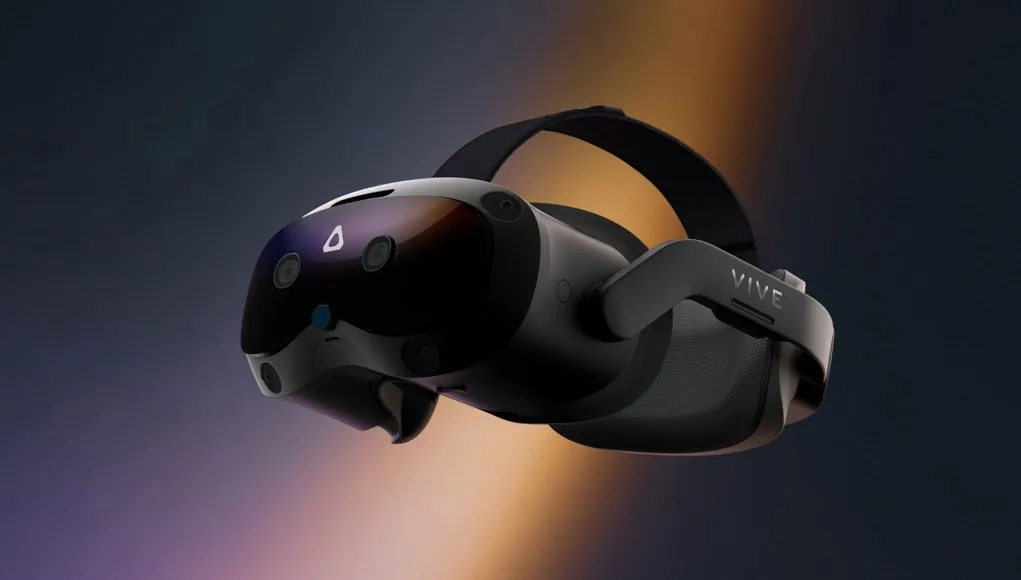
HTC continues to offer business features for devices such as VIVE XR Elite or VIVE Focus. These include: VIVE Business+, Device management, MDM support, and enterprise support options.
Technically, HTC can be interesting for certain use cases, especially if tracking accessories, PC VR, or existing VIVE infrastructure are involved. However, compared to Meta, the consumer ecosystem is smaller. And from our own DACH project experience, direct personal business support is less present today than in previous years.
OpenXR: more important than the store if you develop your own games
For individual applications, the platform selection should not be unnecessarily incorporated into the code. OpenXR Today, it is the most important abstraction layer to address basic XR features across platforms. Unity and Unreal support corresponding workflows.
That doesn’t mean that an application automatically runs on every headset without customization. Platforms differ in hand tracking, passthrough, spatial anchors, scene understanding, enterprise APIs, store processes, and device management. However, a good architecture keeps the platform-specific component as small as possible.
This is particularly important for B2B projects: if hardware or manufacturer policies change, it should not be necessary to completely redesign the entire application.
Which platform do we recommend for which use?
- VR game or consumer app: Test Meta Horizon OS first. The user base and the gaming market clearly speak in favor of it.
- Training, trade show, showroom or managed B2B application: For us, PICO is often the most pragmatic starting point, especially when kiosk mode, centralized management, and direct enterprise contact are important.
- High-end PC simulation: SteamVR or PC VR may be more useful if graphics performance is more important than maximum simplicity in operation.
- Premium spatial computing in the Apple environment: visionOS can be adapted, but it should be chosen deliberately due to costs, equipment fleet, and long-term strategy.
- Future-oriented XR/Smart Glasses projects: Definitely monitor Android XR and evaluate it based on the target device; a pilot phase is advisable for production-critical rollouts in 2026.
- Special HTC infrastructure or tracking requirements: VIVE can continue to be the right niche solution.
For B2B, support is a technical feature
In a consumer application, a developer may, if necessary, resort to forums, documentation, and community support. In a customer project with a fixed deadline, the situation is different. If a firmware version suddenly changes tracking, a kiosk mode reacts differently, or a special API access is required, direct contact with the manufacturer can save several days of development time.
Therefore, we do not only evaluate the platform based on processor, display resolution and store. Professional projects also count. MDM, app distribution, kiosk mode, accounts, privacy, firmware strategy, and accessible support. You can also find a broader overview here VR headsets for business applications and Virtual Reality and Data Privacy.
Conclusion: There is not one best VR platform
The decision will be clearer in 2026 when the use case is first defined. Meta is the strongest ecosystem in the consumer and gaming sectors. PICO In our view, it is currently particularly compelling for many B2B scenarios because enterprise features and personal support are more deeply embedded in product thinking. Apple While delivering technically impressive spatial computing, it must also be economically and strategically compatible with the project. Android XR has great potential, but is not yet mature in every area. SteamVR remains important for high-performance PC VR, HTC VIVE for specialized enterprise setups.
If you plan to develop your own XR application, the hardware decision should be made as early as possible – but the software architecture should still remain open so that a later platform change is possible. VR Agency for companies We test applications on different headsets and choose the platform based on rollout, interaction, performance, and operation – not based on the manufacturer's logo.
FAQ about VR platforms in 2026
You are planning an XR application and are still unsure about which platform to choose? Talk to us.


