One of the most important developments in the XR sector is the increased use of artificial intelligence (AI). AI has already made its way into many areas and will now also revolutionize the XR world. The integration of AI algorithms will enable advanced interaction capabilities and personalized experiences in VR and AR. By combining AI with XR, virtual worlds can be made even more realistic and immersive.
One example of the use of AI in XR applications is speech recognition. By using voice control, users can interact with virtual objects and perform complex tasks without having to use physical input devices. AI-driven chatbots and virtual assistants also improve customer service and enable personalized interactions with customers in VR and AR environments.
The convergence of AR and VR is another development in 2023. Until now, AR and VR have been considered separate technologies, but more and more companies like Meta and Pico are focusing on the potential of combining the two technologies in their products. By using mixed reality technologies, users can enjoy both AR and VR experiences and seamlessly switch between the two modes.
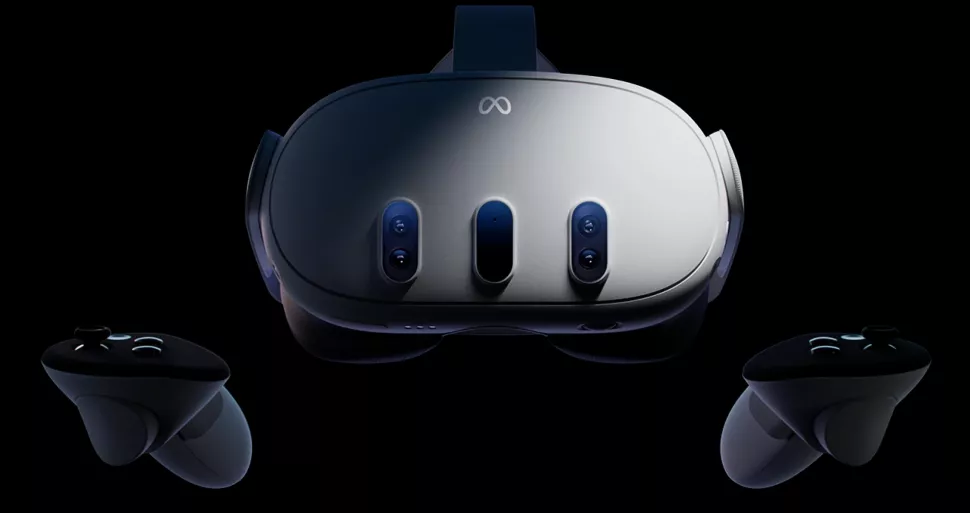
On display at Meta Connect were the new features of Meta's new Quest 3 headset, which include two front-facing full-color cameras and a depth sensor that allow users to see their surroundings through the headset in real time and interact with digital objects overlaid on the real world. Several virtual projections were demonstrated during the demonstration. You can play a virtual board game on your real table or use your real furniture as cover from virtual enemy fire. An upcoming Stranger Things game will place portals to The Upside Down on the walls and ceiling. This kind of virtual integration opens the door to so many kinds of experiences not previously possible in VR.
The union of AR and VR opens up new opportunities for developers and investors. It creates a fertile foundation for the development of new apps and solutions. The use of mixed reality headsets not only enables a broader range of XR experiences, but also promotes collaboration between AR and VR developers.
The development of AR headsets is also a big step forward. Until now, AR glasses were still quite bulky and expensive, which limited their distribution. However, with advances in technology, AR headsets are becoming more powerful, compact and affordable. It is expected that AR headsets with passthrough as a core function will come onto the market, which will significantly expand their application possibilities.
The enhanced AR headsets allow users to see and interact with virtual objects in their real environment. This opens up a wide range of potential applications in education, gaming, e-commerce and more. With the breakthrough of AR headsets, AR technology becomes accessible and experienceable for a wider audience.
Apple has unveiled the lag-anticipated Vision Pro mixed reality headset, which is expected to launch in early 2024. These augmented reality glasses use advanced display and computing technology to overlay 3D objects and plain text into physical space. With a twist of a knob, a virtual reality mode can be activated to completely replace the environment and create a customizable workspace or private cinema experience. The Vision Pro follows this trend, offering a more compact and lightweight option compared to current mixed reality headsets. It also offers a significantly sharper image and enhanced graphics thanks to recent advances in micro OLED display technology and 4K resolution. With Apple's expertise and innovation, the company is well positioned to bring spatial computing to the mainstream market. We're excited.
The XR industry faces a promising future of technology innovation and new application possibilities. The convergence of AR and VR, the innovations in ergonomics of AR headsets and the further development of smart glasses and smartphones in terms of AR capabilities will continue to drive the rapid development of augmented reality.


Artificial intelligence is revolutionizing the XR world with advanced interaction options and personalized experiences in VR and AR. AI algorithms make it possible to make virtual worlds more realistic and immersive. One example is voice recognition, which allows users to interact with virtual objects without using physical input devices.
The Meta Quest 3 is a mixed reality headset that combines AR and VR capabilities. It features two front-facing full-color cameras and a depth sensor that allow users to see their surroundings in real time and interact with digital objects. These features open up new possibilities for immersive experiences.
AR headsets are becoming increasingly powerful, compact and affordable. New models offer pass-through functions that allow users to see and interact with virtual objects in their real environment. These developments are expanding the application possibilities in areas such as education, gaming and e-commerce.
Smart glasses are lighter and less conspicuous than traditional AR headsets and can be worn in everyday life. They offer functions such as recording films from a first-person perspective and streaming on social media. They can also recognize objects and translate foreign languages instantly.
The smartphone is becoming the ultimate AR machine as it becomes ever more powerful. Advances in chips, displays and camera systems are significantly improving the AR experience. Technologies such as the WebXR API make it possible to use AR and VR applications directly via the browser.
The Apple Vision Pro is a mixed reality headset that is set to be launched in early 2024. It uses advanced display and computer technology to superimpose 3D objects in physical space. A virtual reality mode can be activated with a rotary knob, which completely replaces the environment.
The convergence of AR and VR allows users to seamlessly switch between the two modes and opens up new opportunities for developers and investors. Mixed reality headsets promote collaboration between AR and VR developers and create a basis for innovative apps and solutions.