In the Year 1995 Nintendo attempted to develop a virtual reality headset for the mass market with the Virtual Boy. However, the Virtual Boy was not a great success, as the technology was not yet mature enough. The headset suffered from low image quality and resolution, which led to a poor user experience. The Virtual Boy was discontinued after only one year, but it was an important milestone in the history of virtual reality, as it sparked public interest in VR technologies.
2012 - The Breakthrough of VR: Oculus Rift and the New Era of VR Development
2012 – The Oculus Kickstarter Palmer Lucky launches a Kickstarter campaign to fund the product development and his prototype of the headset, the Rift. The campaign raises close to $2.5 million dollars and marks a clear dividing line between VR's past consumer commercial failures and the modern VR revolution. 2014 – Facebook buys Oculus and Sony announces its VR project The social media giant recognizes the potential of Oculus technology, buying the company and making Lucky incredibly rich. This is a successful year, which also sees the Google Cardboard, PSVR, and the Samsung Gear VR are released. Virtual reality is suddenly a very hot topic. This year, Sony also announced that they are working on a VR accessory for the popular PS4 console. The PS4 is much less powerful than VR-capable computers of the time, so everyone is quite curious how they will implement it.
2018 Standalone Headsets are conquering the market
In 2018, the trend towards standalone VR headsets like the Oculus Go Through. These headsets do not require a computer or smartphone to function. This makes them significantly more powerful than VR headsets powered by smartphones.
The Oculus Go, released by Facebook in May 2018, was the first successful standalone VR headset on the market. The headset features a 5.5-inch display with a resolution of 2560 x 1440 pixels per eye. It is powered by a Snapdragon 821 processor and 3GB of RAM. The Oculus Go offers good image quality and a smooth 60Hz refresh rate.
2019 – Oculus Quest, the first mobile headset with positional tracking
The Oculus Quest is a standalone VR headset released by Facebook in May 2019. The headset is a successor to the Oculus Go and offers significantly improved performance and functionality.
The Oculus Quest features a 5.7-inch display with a resolution of 1440 x 1600 pixels per eye. It is powered by a Qualcomm Snapdragon 835 processor and 4GB of RAM. The Oculus Quest offers excellent visual quality, a smooth 72Hz refresh rate, and high motion accuracy thanks to built-in positional tracking.
The Oculus Quest was an instant success, selling over 1 million units in its first six months on the market.
2023 – Apple enters the VR headset market with Apple Vision Pro
Apple's Vision Pro is set to be available in 2025. Apple's long-awaited headset combines VR and AR capabilities and boasts impressive specifications. Whether the headset can meet the high expectations remains to be seen.
The current virtual reality market
The VR industry is growing steadily and has already generated considerable revenue. In 2020, approximately $6.7 billion in revenue was generated worldwide from VR hardware and software. This revenue is expected to increase to over $16 billion by 2023. The gaming sector is one of the main drivers of the VR market, with an estimated revenue of around $589 million in 2020. This revenue is expected to rise to over $4 billion by 2025. VR is also increasingly being used in other areas such as healthcare, education, real estate, tourism, and industry.
The future of virtual reality
The future of virtual reality holds many exciting developments. Forecasts and assessments regarding the future development of VR are promising. VR technologies are expected to be continuously improved, and new areas of application will be explored. The development of more powerful and affordable HMDs will contribute to making virtual reality accessible to a broader audience. VR is expected to continue to grow strongly in areas such as medicine, training and simulation, architecture and design, and entertainment. The integration of VR with other emerging technologies such as artificial intelligence, 5G, and haptics will also have a significant impact.
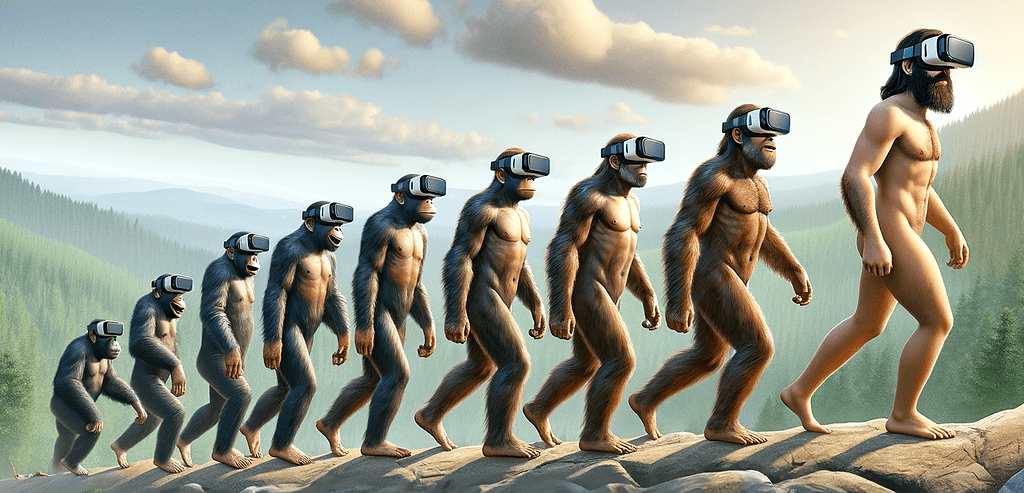
The history of virtual reality is marked by groundbreaking inventions, setbacks, and steady progress. From its earliest beginnings in the 19th century to today's cutting-edge technology, virtual reality has evolved into a fascinating and promising field. The future of virtual reality is ripe with potential, promising many more exciting developments. It will be exciting to see how VR technology continues to evolve in the coming years.